
Spinal Decompression in Odessa, TX
Give the disc room to heal
Non-surgical, computer-controlled traction for disc problems that will not settle on their own.
Traction with a brain
Spinal decompression uses a computer-controlled table to apply a precise, rhythmic pulling force to your spine. The cycle of gentle unloading creates negative pressure inside the disc, which encourages bulging material to draw inward and lets nutrient-rich fluid move back in.
Unlike hanging upside down or old-style static traction, the force is measured, targeted to the problem level, and adjusted session to session as you improve.
Built for disc-driven pain
Decompression earns its keep with disc bulges and herniations, sciatica and leg pain that traces to a disc, and degenerative discs that ache under load. It is a serious option to exhaust before anyone talks about injections or surgery.
It is not for everyone; certain conditions like fractures, severe osteoporosis, and some post-surgical spines rule it out, which is exactly what the exam is for.
What a session feels like
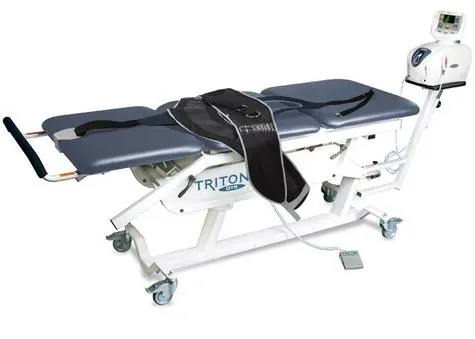
Our table is a Triton DTS, the computer-guided kind: you lie down fully clothed, a harness anchors your lower back or neck, and the machine runs a programmed cycle of gentle pull and release for fifteen to thirty minutes. The computer holds the force steady and specific to the level being treated.
Most patients describe it as a slow, pleasant stretch. Plenty doze off. A typical plan runs several sessions over a few weeks, and progress gets re-checked as you go rather than assumed.
Decompression plus the muscle side
A disc rarely fails in isolation. The joints above and below stop moving well, and the deep stabilizers shut down. Pairing decompression with specific adjusting and AMIT reactivation treats the disc and the reasons it got overloaded.
How AMIT worksSigns a disc is involved
Pain that runs below the knee, worse with sitting or bending, better lying down, sometimes with numbness or tingling in the foot. Those patterns point disc-ward, and the exam confirms it.
Read about sciaticaDecompression, answered
Does decompression hurt?
No. Most patients find it comfortable, and some doze off on the table. You feel a firm, rhythmic stretch, never a yank.
How long is a course of care?
A typical plan runs several weeks of regular sessions, tapering as symptoms retreat. Your exam findings set the actual number; we do not sell packages of visits you may not need.
Can it help me avoid surgery?
Many disc patients improve enough with decompression and the rest of the plan to take surgery off the table. When findings say you genuinely need a surgical consult, we will tell you that plainly and help you get there.
Tired of pain that runs down your leg?
Find out if your disc qualifies. One exam answers it.
Call (432) 550-2273